This afternoon, as I sit here contemplating all the planning and packing for our move, my heart feels full—not because things have been easy, but because of everything we’ve walked through to get to this point.
People often ask me what it’s like to be a foster kid, and truthfully, I never quite know how to answer. It’s not a “normal” childhood. It’s a fractured one. One that requires you to piece your identity together slowly, over decades, from scraps of memory, paper trails, and the rare photo if you’re lucky.
My brother and I entered foster care when I was around four years old and he was just a baby. I still remember the night that changed everything. We were living with our father after our parents had separated. What I didn’t know then—but later learned—was that my dad had been a Platoon Leader in the Marines during the Vietnam War. That war shattered him. He came home with scars no one could see, and he turned to alcohol and drugs to cope.
That night, he wanted to go to a bar but couldn’t find a babysitter. So he left us home alone—me in charge. I had already been changing my brother’s diapers and feeding him bottles by then. I didn’t feel afraid. I was used to it. The only rule my dad gave me was: Don’t open the door for anyone.
Hours passed. Then came the knock. It was our next-door neighbor—the one who sometimes watched us. She realized we were alone and called the police. My father returned just as we were being loaded into the back of the squad car. I still remember his anguished screams as we drove away. That moment was the start of our foster care journey.
Over the next four years, we bounced through six or seven different homes—some good, some bad, and some downright awful. The best one, the one that stayed with me, was the farm. I lived there for over a year before we were adopted. That farm was magic. It was barefoot summers and chickens and goats and plums picked straight from the tree. For a time, I could pretend I was just a normal kid.
But the truth is, foster kids don’t live normal lives. We don’t have baby pictures. We don’t have keepsakes. We don’t have someone recording our first words or birthdays. We often don’t even know where we came from. I remember as a child, watching classmates show off their family trees, their ancestry projects. I had nothing to show. So I made things up. At one point, I told people I was Jewish just so I could feel special and have more holidays off school.
It wasn’t until I was in my thirties that I learned my actual ancestry—Irish on both sides. It was a quiet but profound moment. A small but powerful piece of the puzzle snapped into place.
The lack of photos always hurt the most. When I graduated high school and the yearbook requested baby pictures, I had none to submit. I felt exposed, ashamed. But years later, a miracle arrived: I learned from my biological father’s family—he had passed by then—that he had kept a fireproof safe filled with baby photos, my childhood drawings, and little notes I’d made for him. He had saved those things. He had protected them. And when I finally received that large envelope in the mail, it felt like reclaiming a stolen part of my story.
That’s why, when we adopted our daughters, I made it a mission to give them what I never had—photos, memories, keepsakes, and a constant reassurance that they belong. A few years ago, their biological grandmother and great-grandmother sent us baby pictures of the girls. I’ll never forget how they held those photos—how they studied their faces, their baby selves. My youngest clung to me, whispering, “Hold me tighter, Mommy. Hold me tighter.”
She wasn’t just asking for a hug. She was asking to be anchored—to know that she was held in love across time, across families, across two worlds that now had to coexist inside her.
My older daughter, ever the deep thinker, was quiet. Reflective. Her eyes filled with the unspoken: grief, wonder, maybe even guilt. Those photos told stories her memories could not. And I felt it all in that moment—our shared ache, our shared healing. A strange and beautiful duality that only adopted children fully understand: not belonging, yet finally finding a place to belong.
That duality has shaped me for life.
Even now, sometimes I feel like I don’t fully belong anywhere. I wasn’t quite part of my biological family anymore—and I was okay with that, given what we’d come from—but I also wasn’t truly part of my adoptive family either. At Christmas dinners with extended relatives, I stayed quiet, nose buried in a book, watching the cousins and wondering what it would feel like to be as effortlessly accepted as they were. I longed to visit my friends’ homes just to see how a “normal” family worked. It was curiosity more than jealousy. I just wanted to understand.
And now, raising my daughters—two fierce, funny, deeply feeling souls—I see that they’re learning what it means to be a family. Because that isn’t something they instinctively knew. I didn’t either. It has to be taught, modeled, repeated, and reassured.
I tell them often: We don’t give up on each other. They are loved unconditionally. They don’t have to earn their spot in our family.
In foster care, love feels conditional. You live on borrowed time, on someone else’s terms. One mistake, one agency decision, and your whole world changes. You learn to compartmentalize—to stash away your fears, to pack light, emotionally and physically. I became an expert at it. I had to. It was survival.
Some kids act out to reclaim a sense of power. Others go numb. I was the former—a fighter. I refused to be powerless. And maybe that’s why I became an attorney. Somewhere deep down, I vowed that no one would silence me again. I would have a voice. And now I do.
But the voice I cherish most is the one I use at home, as “Mom.”
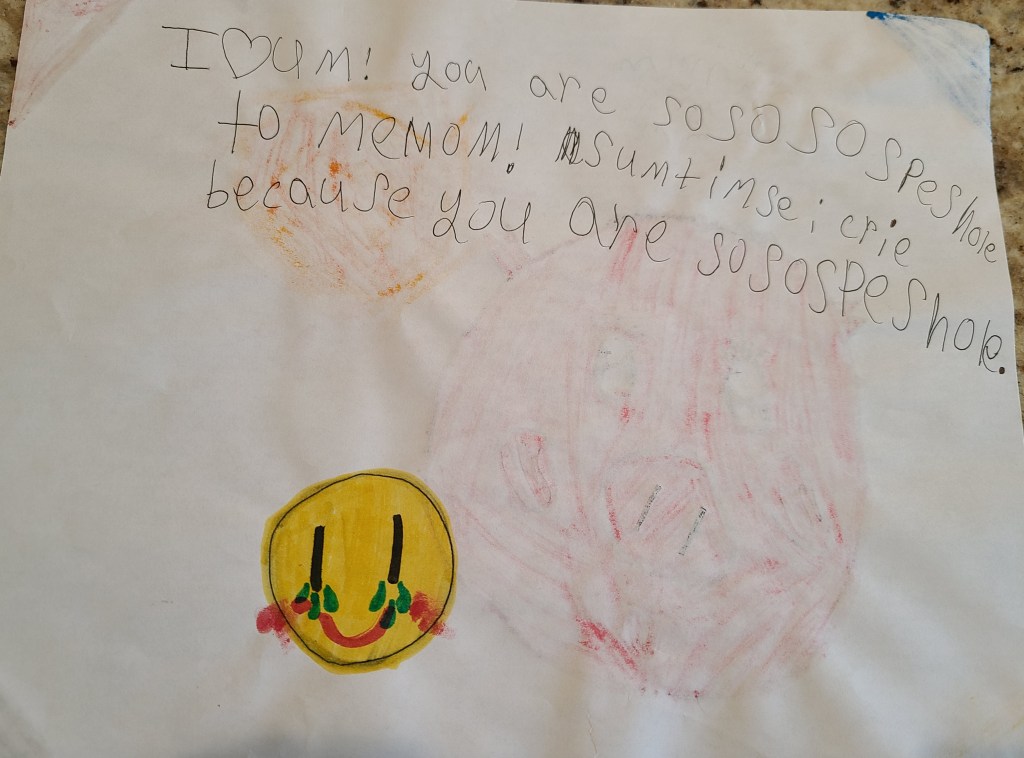
And the greatest honor of my life is holding space for my daughters—letting them know they belong, not just in our house, but in our hearts, forever. My youngest daughter left me the sweetest note a few years ago, and I treasure it because it says everything to me: “I [love] you [mom]! You are so so so special to me Mom! Sometimes I cry because you are so so special.”
Yes, sometimes I cry because they are so, so special.
And sometimes they cry for the same reason.
And in those tears, we meet in the middle—between what was and what is.
Between the life we lost and the one we’ve chosen to build together.
And that, to me, is the truest definition of family.
 Coming Home to Dixie
Leave a comment